
OUR STORY
The story of Noi.
A name. A workaround. A conversation with a wife. And a baby whale in a bathtub.
CHAPTER ONE

The name
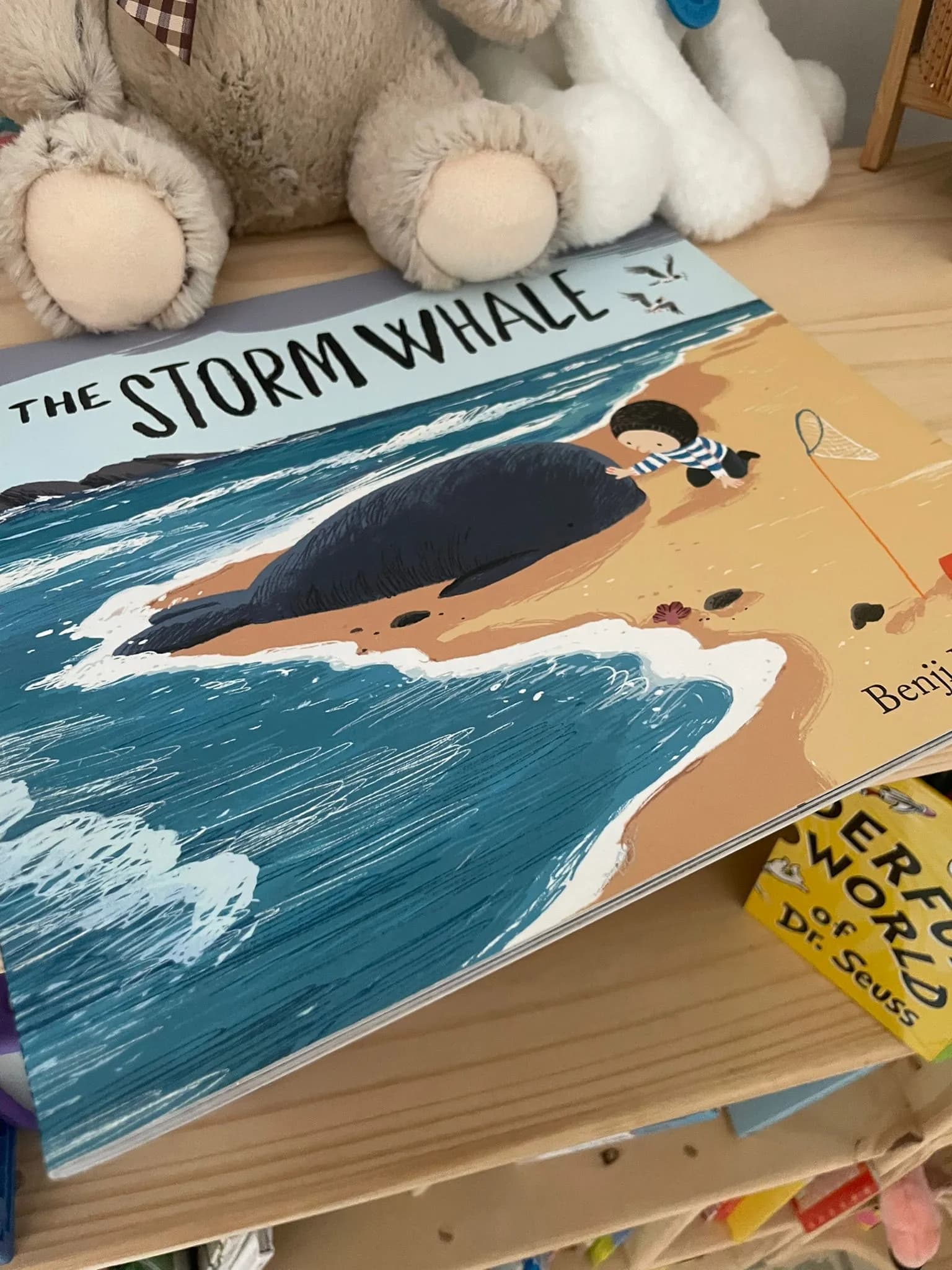
'Noi' is named after a boy in The Storm Whale, one of my son's favourite children's books.
The boy goes exploring while his Dad would spend his days fishing out at sea in order to provide for them. One day, Noi finds a baby whale washed up on the beach and brings it home to care for it.
When you read the story, it feels obvious that's what you'd do. Of course he'd bring it home. But if you stop and think about it…a baby whale? In the bathtub?! The sheer audaciousness.
That's what makes us all human, though. Going from idea, to possibility, to action. Children do this effortlessly, and they do it before someone tells them what isn't possible.
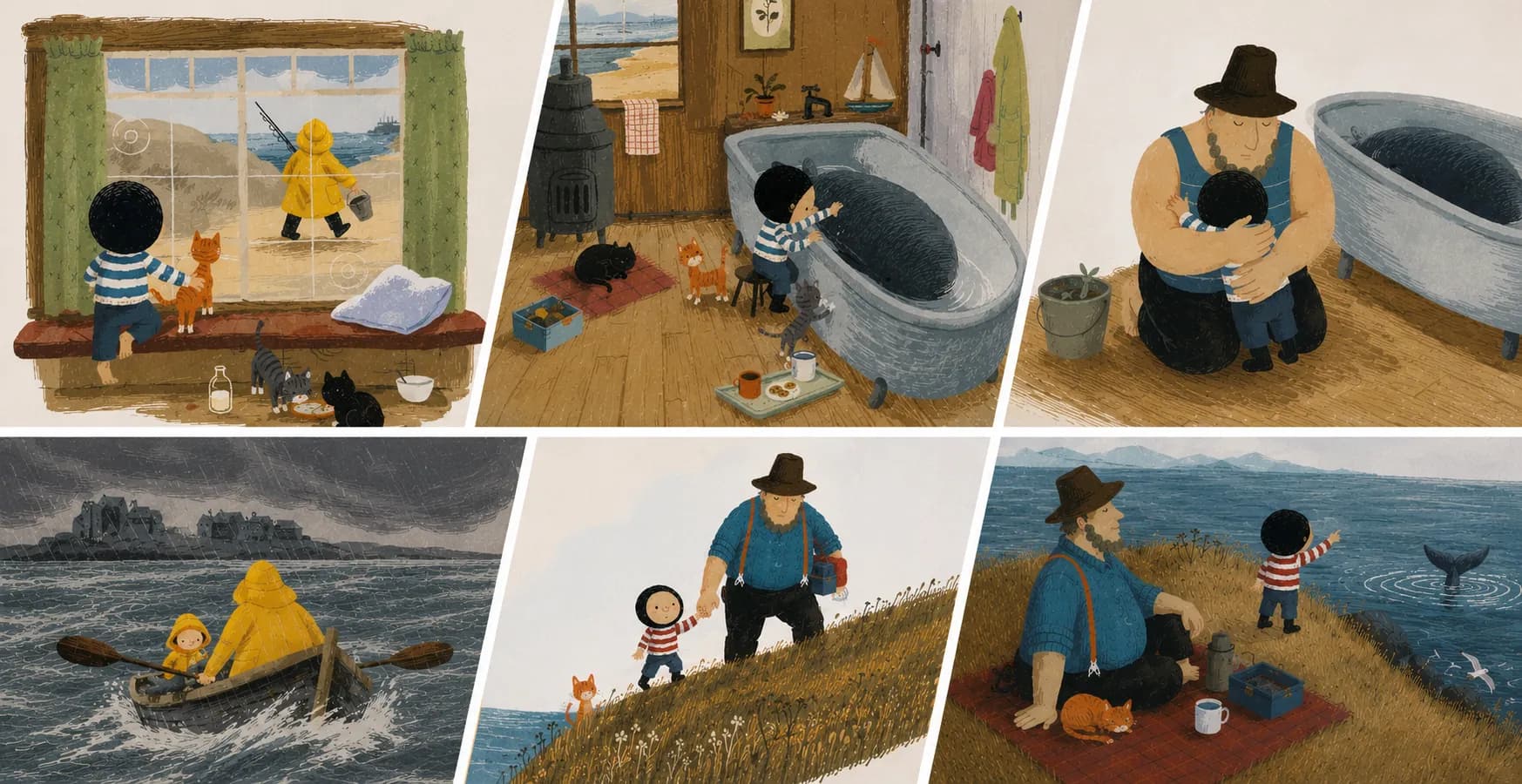
Back to Noi — he has six cats, but he's lonely too. So when his father returns home that evening, he's caught between keeping the whale a secret and figuring out what to do together. They make it a joint mission to return the baby whale to its family at sea, and caring for the whale in this way becomes something they share.
I've always loved that story because it captures two things that matter deeply to me: the courage to think differently, and the desire to share those ideas with other people.
Because, in the end, that connection is all that really matters.
"And it was also felt fitting when I later discovered that Noi means "We" in Italian."


CHAPTER TWO

How Noi came to life.
I used to be a power Google Docs user. I loved it. Considering how many years I used it in a business environment, it's pretty surreal that I'm now typing this in Noi.
I co-founded an ecommerce business in Barcelona. I led business development and frequently wrote up strategy documents, campaign briefs, and project plans to share with multiple competing marketing agencies, development companies, logistics partners, or other external collaborators.
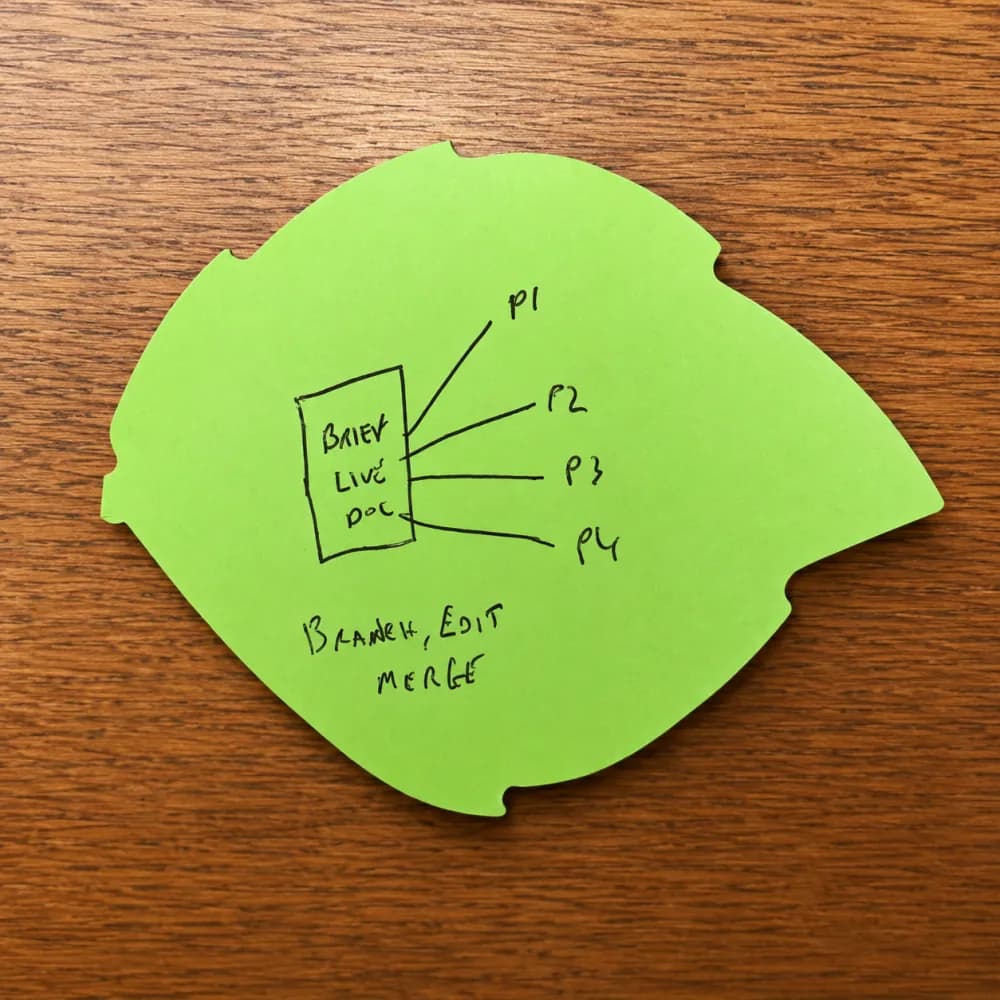
Noi solves something I had a manual workaround for, built into my workflow for years:
I would duplicate the same document and share a separate copy with each external agency, developer, or partner. Because of course, you don't want them seeing each other. But often I'd remember a piece of critical information, something that was missing, or a better way to explain part of the brief. Every addition or improvement had to be copied into every version manually. Extremely time consuming.
Meanwhile, each external team would leave its comments and questions in its own respective copy of the document. Feedback became scattered across multiple versions, making it frustrating to compare ideas or keep everyone working from the latest version.
And that was in Google Docs, one of the best collaborative tools available. If the document started life as a Microsoft Word file, the process was even more cumbersome.
"Visible feedback was clearly influencing the feedback that came after it."

Eventually, I sat down to design something better.
Of course, I started writing those ideas in...Google Docs.
As I shared the document with my wife, friends, former colleagues, developers and collaborators, I became more aware of the process and noticed something.
I wasn't particularly comfortable having all these different people participating in the same document. They come from completely different parts of my life. Maybe I felt exposed, or simply too conscious of how they would perceive one another. Would they feel free enough to contribute openly?
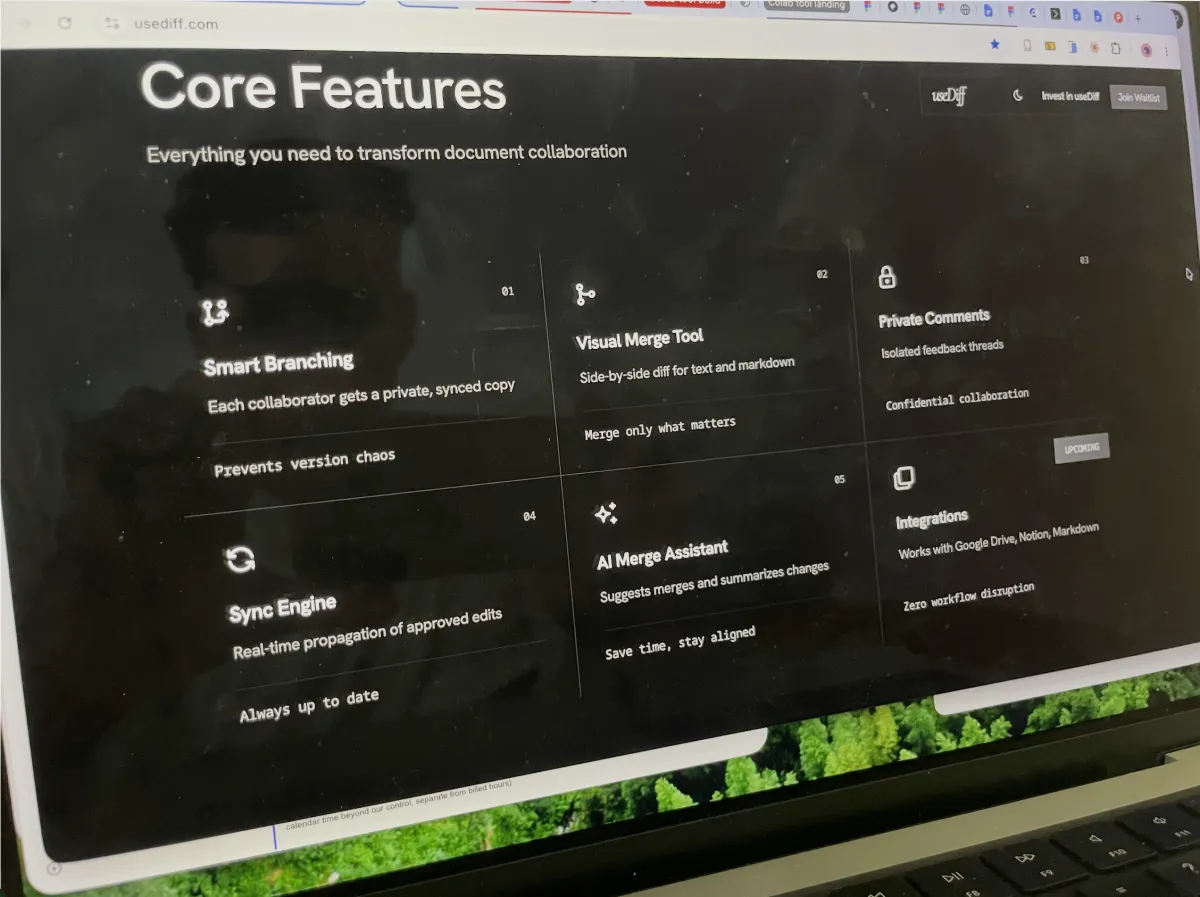
Then I noticed something even more interesting.
"At key places of the document, once someone had already left a comment on a particular section, later reviewers often skipped it altogether."
Was this because they felt the point had already been addressed? Did they agree? Did they disagree? I couldn't tell. Visible feedback was clearly influencing the feedback that came after it.
Paradoxically, adding more reviewers didn't seem to make the feedback richer. If anything, it became less comprehensive.
CHAPTER THREE

Theeye-opener
The observations stayed with me.
The problems seem subtle but they're massive in their impact. For most of my career I'd worked inside one company. Now I was independent, collaborating with people from completely different circles.
I realised I could ask far more people for thoughtful feedback than I actually was. But I wasn't going to invite former colleagues, friends, developers, advisors and collaborators into one giant shared document.
That limited my reach and the quality of the network. And it wouldn't be so helpful if the reviewers themselves also kept holding back.
At that point, I was convinced I was building this for freelancers and independents, just like me.
Then my wife came back into the picture.
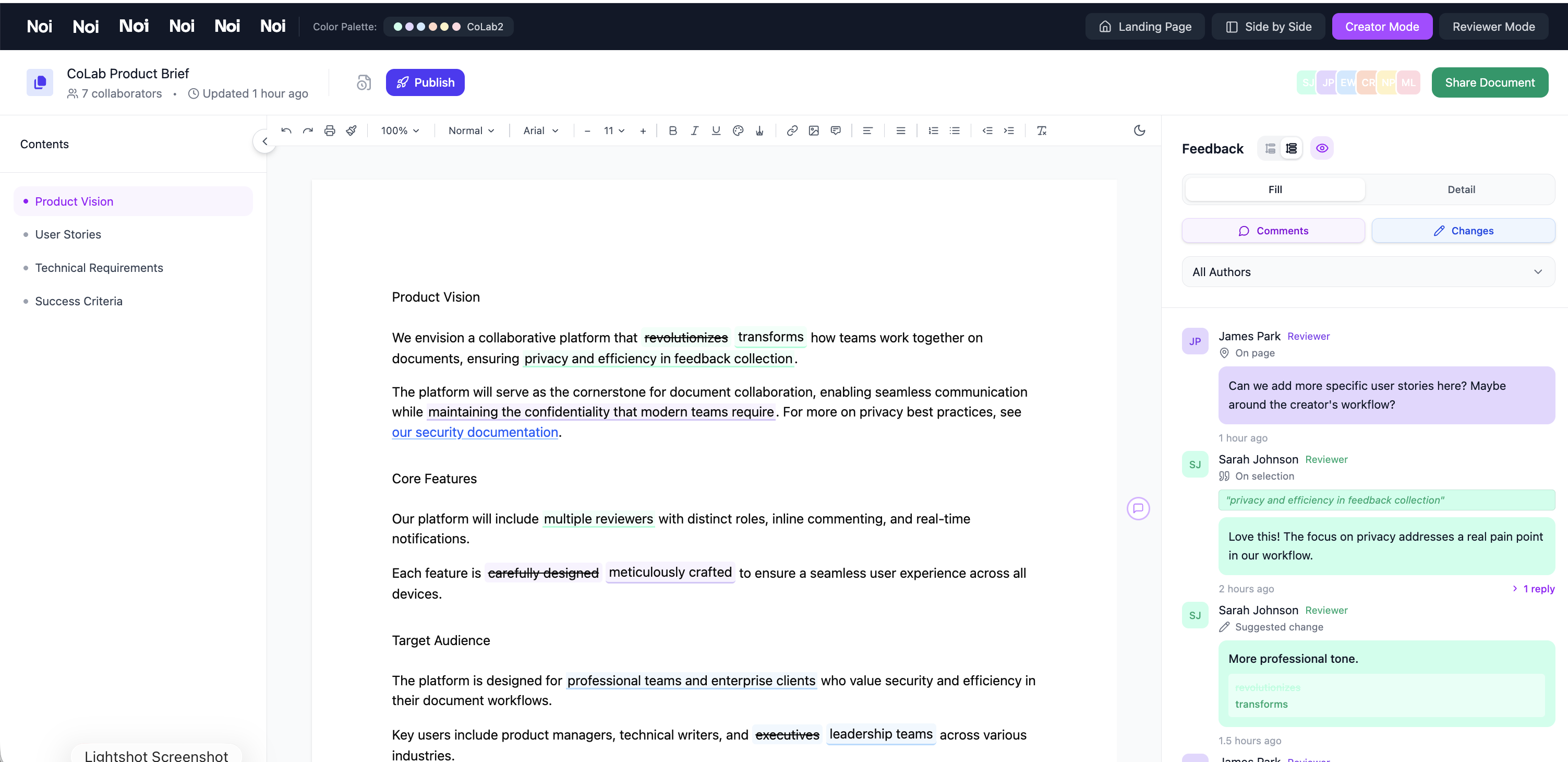
She'd spent years working as a digital copywriter, and when I explained the idea she immediately said, "My team could really use this."
She laughed and said, "Whenever we review campaign briefs, it's almost always me and one other guy commenting while everyone else stays quiet." That was the moment I stopped thinking of Noi as something just for freelancers and independents. She made me realize the same dynamic existed inside teams. Whether the reasons were social, cultural or something else entirely didn't really matter. The dynamic clearly existed.
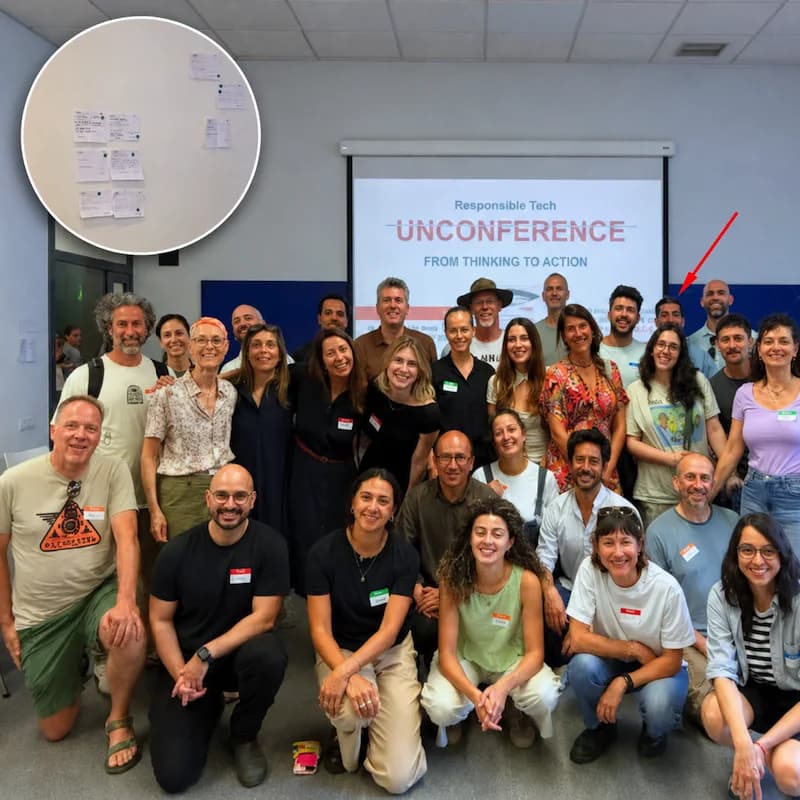
At the same time, during an unconference at Elisava Design School in Barcelona, everyone proposed discussion topics on sticky notes. We were each given a green dot to vote for the sessions we wanted.
One idea attracted the first few votes early. As more people walked up, those existing dots became impossible to ignore. By the end, that topic had accumulated far more votes than the others.
A small experiment in public voting reminded me how quickly opinions become contagious.
"Did I really want my 'Shared' list to read like my LinkedIn contacts list?"


"Ok so it's a document-editing tool". I knew that much.
I thought about authors, and copywriters, marketing leads, and project managers. Then I started designing mockups in Figma. Again, I shared them with a few people and found myself asking the same question: did I really want my 'Shared' list to read like my LinkedIn contacts list?
That's when I realized something.
"Every collaboration tool built since Google Docs has made the same assumption: as soon as you invite a second person, everyone sees everyone."

That's a wonderful default — it promotes teamwork, alignment, getting everyone on the same page. But it's not the only way collaboration can work and we can benefit from hearing independent voices — and more of them — and encouraging more original thinking.
Noi has been built to give people the freedom to invite a broader range of voices into the conversation, allowing collaboration to benefit from independent judgment before consensus, and where visibility is a choice rather than an assumption.
We're starting with text documents, and we're already experimenting with Noi Links, bringing the same private feedback lanes to websites through an in-frame review experience.
More to come...
Noi Docs
For documents. Get private, independent feedback on manuscripts, proposals, briefs, essays — anything you'd write.
Explore Noi DocsNoi Links
For anything else. Share a link and collect private feedback on designs, websites, prototypes — anything in a frame.
Coming soonCHAPTER FOUR

Building Noi
When I first started discussing the premise for Noi, which was provisionally called the very catchy "Collab tool", I was lucky enough to meet some incredible people.
They got excited about the idea and made it feel like it was easy to build.
It wasn't.
I hate them.
But totally worth it, and now I love them.
While I've spent an immense amount of time pushing the ideas forward and coordinating the vision, Noi only exists because of the people who believed in it enough to help build it. They designed it, coded it, challenged it, found many flaws, and they found many flows that fixed those flaws.
That's why I'm trying to convince them to put their faces on this page.
They're being shy.

"The power of invisibility."
Former co-founder of xtralife, a Barcelona-based video game ecommerce business. Built Noi because he'd been manually duplicating documents for years — and eventually decided someone should just fix that.

"I love the idea, let's do it."
The magician with a smile. The guy who makes everything possible. Believes the best software feels effortless.

"There is definitely a big bug here I'll check that."
Built the technical foundation. Greg focuses on building systems that stay simple on the surface while remaining reliable and scalable underneath, ensuring every interaction in Noi feels fast and intuitive.

"The time to value is too far away."
Always has an ace up his sleeve. Understands product like no one else and has a knack for tackling what's most valuable first.

"This needs more whitespace"
Responsible for every pixel you see — from the cream background to the purple that feels both calm and alive. Designed Noi the way she wished every tool looked.

"Let's launch."
Ever the pragmatist and all-round wizard. Enjoys solving the technical problems users never notice.

"We can do it but…"
Strategy-first senior engineer. The man with the most comprehensive summaries of what's been done. And why. Swaps between robot and human mode seamlessly.
Noi is not perfect, but it was built with care, curiosity, and love. We don't believe every collaborative conversation should work the same way. We simply believe people should have the choice.
We hope you enjoy your journey with Noi.
